


In the rapidly evolving architecture, engineering, and construction (AEC) industry, BIM and digital twins represent the pinnacle of technological integration, enabling the creation of smarter assets that optimize performance across the entire lifecycle. We leverage BIM and digital twins to transform static models into dynamic, data-rich environments that drive efficiency, sustainability, and innovation. By combining Building Information Modeling (BIM) with digital twin technology, we empower stakeholders to build smarter assets that respond intelligently to real-world conditions.
Understanding BIM: The Foundation of Modern Asset Creation
Building Information Modeling (BIM) serves as the cornerstone for digital representation in construction. BIM creates comprehensive 3D models enriched with detailed data on geometry, materials, spatial relationships, and functional characteristics. We utilize BIM to facilitate collaborative design, clash detection, and precise quantification during planning and construction phases.
- Enhanced Collaboration: BIM enables multidisciplinary teams—architects, engineers, contractors—to work on a single shared model, reducing errors and rework.
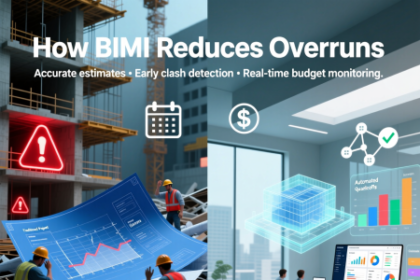
- Cost and Time Savings: Accurate simulations identify issues early, minimizing on-site changes that often inflate budgets by 20-30%.
- Sustainability Integration: BIM incorporates energy analysis tools to optimize designs for lower carbon footprints from the outset.
BIM evolves beyond mere visualization; it embeds intelligence into assets, setting the stage for advanced applications like digital twins.
The Emergence of Digital Twins: Elevating BIM to Dynamic Realities
Digital twins extend BIM by creating virtual replicas that mirror physical assets in real-time. While BIM provides a static snapshot of design intent, digital twins incorporate live data streams from IoT sensors, enabling continuous monitoring and predictive capabilities.
Key Distinctions Between BIM and Digital Twins:
- BIM focuses on design and construction phases with predefined data.
- Digital twins evolve throughout operations, using real-time inputs for ongoing optimization.
We integrate BIM and digital twins to bridge design with operations, ensuring assets perform optimally post-construction. Digital twins predict failures, simulate scenarios, and support proactive maintenance, transforming reactive management into predictive strategies.
How BIM and Digital Twins Integrate to Build Smarter Assets
The synergy of BIM and digital twins creates a seamless flow from conceptual design to long-term asset management. BIM models form the foundational structure, enriched with real-time data to form robust digital twins.
Integration Steps We Employ:
- Model Development: Start with high-fidelity BIM models using standards like IFC for interoperability.
- Data Fusion: Connect IoT sensors, BMS, and environmental data to the BIM backbone.
- Real-Time Synchronization: Employ platforms that update the digital twin dynamically.
- Analytics Layer: Apply AI and machine learning for insights and predictions.
This integration allows us to build smarter assets that adapt to usage patterns, environmental changes, and occupant needs.
Benefits of BIM and Digital Twins in Creating Smarter Assets
Adopting BIM and digital twins yields transformative advantages across the AEC lifecycle.
Operational Efficiency:
- Predictive maintenance reduces downtime by up to 50% through early fault detection.
- Energy optimization via real-time monitoring cuts consumption by 20-40%.
Cost Reductions:
- Lifecycle cost savings from informed decisions during design and operations.
- Minimized rework through accurate as-built models.
Sustainability Gains:
- Precise carbon tracking and scenario modeling support net-zero goals.
- Resource optimization extends asset longevity.
Enhanced Safety and Compliance:
- Virtual simulations test emergency responses without risks.
- Continuous monitoring ensures regulatory adherence.
By focusing on BIM and digital twins, we deliver smarter assets that exceed traditional performance benchmarks.
Real-World Case Studies: BIM and Digital Twins in Action
Numerous projects demonstrate the power of BIM and digital twins in building smarter assets.
Case Study 1: West Cambridge Campus Digital Twin
We developed a campus-wide digital twin integrating multiple BIM models with GIS data. This enabled real-time facility management, energy monitoring, and crowd simulation for emergencies, resulting in 15% energy savings and improved space utilization.
Case Study 2: Heathrow Airport Integration
BIM models evolved into operational digital twins, providing lifecycle insights that reduced risks and costs while enhancing passenger experiences through optimized maintenance.
Case Study 3: The Shard, London
Photogrammetry and BIM created pre-construction digital twins for logistics planning, minimizing disruptions in dense urban settings and ensuring precise prefabrication.
Case Study 4: East Hospital Digital Twin Project
Over a year-long implementation, BIM-integrated digital twins facilitated continuous monitoring, predictive analytics, and fault detection, improving patient care environments and operational efficiency.
These examples illustrate how BIM and digital twins build smarter assets in diverse contexts, from skyscrapers to healthcare facilities.
Technologies Enabling BIM and Digital Twins Integration
Advanced tools and standards drive seamless BIM and digital twins adoption.
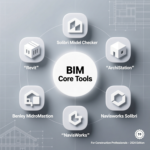
Key Technologies:
- IoT and Sensors: Provide real-time data feeds.
- AI/ML: Enable predictive modeling and anomaly detection.
- Cloud Platforms: Ensure scalable data storage and collaboration.
- Standards like ISO 19650 and IFC: Promote interoperability.
We prioritize open standards to future-proof smarter assets built with BIM and digital twins.
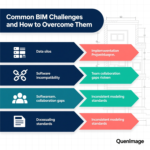
Challenges in Adopting BIM and Digital Twins – And How We Overcome Them
Despite benefits, challenges exist:
- Data Interoperability: Addressed through standardized formats.
- Skill Gaps: Mitigated via targeted training programs.
- Initial Costs: Offset by long-term ROI.
- Cybersecurity: Secured with robust protocols.
We guide clients through these hurdles to realize the full potential of BIM and digital twins.
The Future of BIM and Digital Twins in the AEC Industry
The convergence of BIM and digital twins with artificial intelligence (AI), extended reality (XR), 5G networks, blockchain, and emerging quantum computing promises revolutionary advancements in the architecture, engineering, and construction (AEC) sector. As of 2025, BIM and digital twins are evolving into dynamic, intelligent systems that enable real-time optimization, predictive decision-making, and sustainable lifecycle management. We pioneer these integrations to create smarter assets that adapt autonomously, reduce carbon footprints, and enhance resilience against climate challenges.
Emerging Trends in BIM and Digital Twins:
- Cognitive Digital Twins: Self-learning systems incorporating AI for autonomous optimization and proactive decision-making.
- Metaverse Integration: Immersive virtual environments for multi-stakeholder collaboration and scenario testing.
- City-Scale Twins: Comprehensive urban models integrating geospatial data for smart city planning and infrastructure resilience.
- Sustainability Focus: Real-time carbon tracking, energy optimization, and net-zero simulations.
We lead the adoption of BIM and digital twins to deliver smarter assets that anticipate needs, minimize waste, and support global sustainability goals.
In-Depth Exploration of Levels of Development (LOD) in BIM
Levels of Development (LOD) provide a standardized framework for defining the reliability and detail of BIM elements throughout project phases. LOD ensures clear communication among stakeholders, aligning expectations for model progression from conceptual design to as-built accuracy.
LOD 100: Conceptual Design Represents basic massing and approximate geometry. Elements symbolize general forms, volumes, and locations without precise dimensions or non-graphic data. Used for feasibility studies, site planning, and initial cost estimates. Reliability is low, focusing on high-level analysis like sunlight exposure or zoning compliance.
LOD 200: Approximate Geometry Elements feature generalized shapes with approximate sizes, quantities, and orientations. Non-graphic information includes basic performance criteria. Supports schematic design, clash avoidance in broad terms, and preliminary energy modeling. Teams use LOD 200 for coordination reviews and quantity takeoffs with tolerances.
LOD 300: Precise Geometry Models accurate geometry, sizes, shapes, locations, and orientations. Includes detailed non-graphic data like materials and connections. Ideal for construction documentation, detailed clash detection, and accurate simulations such as structural analysis or energy performance. Forms the baseline for many digital twin foundations.
LOD 350: Connections and Interfaces Builds on LOD 300 by adding interfaces between elements, supports, and connections to other systems. Critical for interdisciplinary coordination, especially MEP with structural elements. Enables precise fabrication planning and reduces on-site conflicts.
LOD 400: Fabrication-Level Detail Specifies fabrication, assembly, and installation details. Includes manufacturer-specific data, tolerances, and shop drawings. Used for prefabrication, modular construction, and detailed scheduling. Supports 4D simulations integrating time and 5D for cost.
LOD 500: As-Built Verification Represents the final, verified model mirroring the constructed asset. Includes field-verified dimensions, operational data, and maintenance information. Serves as the handover for facilities management and the core dataset for operational digital twins.
We apply LOD progressively in BIM and digital twins workflows, ensuring models evolve reliably to support smarter assets from design through operations.
Sensor Types Enabling Digital Twins
Digital twins rely on diverse sensors to capture real-time data, transforming static BIM models into dynamic replicas.
Structural Sensors:
- Strain gauges monitor deformation.
- Accelerometers detect vibrations.
- Tiltmeters track settlement. Essential for health monitoring in bridges and high-rises.
Environmental Sensors:
- Temperature and humidity sensors optimize HVAC.
- CO2 and air quality monitors enhance occupant comfort.
- Light sensors control automated shading.
Energy and Utility Sensors:
- Smart meters track consumption.
- Flow sensors monitor water and gas.
- Power quality analyzers detect anomalies.
Occupancy and Usage Sensors:
- PIR motion detectors inform space utilization.
- People counters optimize circulation.
- Wearables provide feedback on comfort.
Advanced Sensors:
- LiDAR for ongoing spatial scanning.
- Thermal cameras for envelope performance.
- Acoustic sensors for noise monitoring.
We integrate these sensors seamlessly with BIM and digital twins to enable continuous data flows for smarter assets.
AI Algorithms for Predictive Analytics in BIM and Digital Twins
AI enhances BIM and digital twins through advanced predictive capabilities.
Machine Learning Models:
- Supervised regression predicts energy usage based on historical data.
- Classification algorithms detect anomalies in structural integrity.
Deep Learning:
- Neural networks forecast maintenance needs from sensor streams.
- Convolutional networks analyze images from drones for defect detection.
Reinforcement Learning:
- Optimizes building controls autonomously, adapting to occupancy patterns.
Time-Series Forecasting:
- LSTM networks predict peak loads and renewable generation.
Generative AI:
- Creates optimized design variants compliant with sustainability goals.
We deploy these algorithms within BIM and digital twins platforms to shift from reactive to predictive management of smarter assets.
Sustainability Metrics and Net-Zero Achievement
BIM and digital twins drive net-zero through quantifiable metrics.
Key Metrics:
- Embodied carbon from materials.
- Operational carbon from energy use.
- Whole-life carbon encompassing lifecycle phases.
- Energy Use Intensity (EUI) in kWh/m²/year.
- Renewable Energy Fraction.
Real-Time Tracking: Digital twins monitor actual performance against targets, enabling dynamic adjustments.
Scenario Modeling: Simulate retrofits, renewables integration, and behavioral changes to achieve net-zero pathways.
We utilize BIM and digital twins for precise carbon accounting, supporting certifications like LEED and BREEAM toward net-zero smarter assets.
Interoperability Frameworks
Standards ensure seamless data exchange in BIM and digital twins.
IFC (Industry Foundation Classes): Open format for model interoperability.
ISO 19650: Governs information management using BIM.
COBie: Facilitates handover data.
Emerging Standards: USD for visualization, bSDD for semantic consistency.
We prioritize open standards to future-proof BIM and digital twins integrations.
Detailed Sub-Processes in Integration
Integration of BIM and digital twins involves structured sub-processes.
- Data Mapping: Align BIM attributes with IoT schemas.
- Synchronization: Real-time APIs or middleware for updates.
- Validation: Automated checks for consistency.
- Enrichment: Layer analytics and simulations.
- Feedback Loops: Physical-to-digital and digital-to-physical controls.
We execute these sub-processes meticulously to create robust smarter assets.
Extended Case Analyses with Metrics
Siemensstadt Berlin: City-scale digital twin optimizes energy flows, achieving projected 20-30% efficiency gains.
Singapore Virtual City: Integrates traffic, energy, and environmental data, reducing urban heat by simulated interventions.
Heathrow Airport Digital Twin: Predictive maintenance cuts downtime by 15-25%, per operational metrics.
We replicate and exceed these outcomes in our BIM and digital twins deployments.
Tool Comparisons: Revit vs. Bentley iTwin
Revit: Excels in architectural detailing, parametric families, and Autodesk ecosystem integration. Strong for design-phase BIM but limited native digital twin capabilities.
Bentley iTwin: Superior for infrastructure-scale twins, open interoperability, and real-time data fusion. Advanced analytics and cloud-based collaboration.
We select tools based on project needs, favoring iTwin for operational digital twins in smarter assets.
Regulatory Impacts
Mandates like UK BIM Level 2 and EU sustainability directives accelerate BIM and digital twins adoption.
Workforce Transformation
Upskilling in AI, data analytics, and twin management reshapes roles.
Economic Models for ROI Calculation
Lifecycle savings: 15-25% from predictive maintenance; 20-40% energy reductions.
Risk Management Strategies
Simulation of scenarios mitigates financial, safety, and environmental risks.
Environmental Simulations
Model climate impacts for resilient designs.
Occupant Comfort Optimizations
AI-driven adjustments for thermal, acoustic, and visual comfort.
Retrofit Applications for Existing Buildings
Scan-to-BIM enables twin creation for legacy assets.
Global Standards Evolution
From IFC to quantum-resistant protocols.
Industry 4.0 Parallels
Autonomous optimization akin to smart manufacturing.
Blockchain for Data Security
Immutable ledgers ensure traceability and tamper-proof records in digital twins.
Edge Computing for Real-Time Processing
Reduces latency in sensor-to-twin data flows.
VR/AR Applications in Maintenance
Immersive guidance for field technicians.
Predictive vs. Prescriptive Analytics
Predictive forecasts issues; prescriptive recommends actions.
Lifecycle Costing Examples
Whole-life models integrate capex and opex.
Carbon Embodiment Calculations
Track material impacts precisely.
Resilience Against Climate Change
Simulate extreme events.
Pandemic Response Modeling
Airflow and occupancy scenarios.
Equity in Smart Assets
Inclusive design via twin simulations.
Ethical Data Use
Privacy safeguards in twin datasets.
Scalability from Single Building to Portfolios
Federated twins manage enterprise assets.
Hybrid Twins for Infrastructure
Combine physics-based and data-driven models.
Quantum Computing Potentials
Accelerate complex optimizations in future twins.
Suggestions / Recommendations
- Invest in interoperable platforms supporting IFC and open standards.
- Prioritize IoT infrastructure during construction for seamless digital twin activation.
- Train teams on AI-driven analytics for maximum value extraction.
- Start with pilot projects to demonstrate ROI before full-scale adoption.
- Collaborate with technology partners for customized integrations.
- Focus on data governance to ensure security and privacy.
- Incorporate sustainability KPIs from the design phase.
- Explore city-scale applications for broader impact.
- Regularly update models with as-built scans.
- Leverage predictive maintenance to extend asset life.
FAQs
- What is the difference between BIM and digital twins? BIM is a static digital model for design and construction; digital twins are dynamic replicas updated in real-time for operations.
- How do BIM and digital twins improve sustainability? They enable energy simulations, real-time monitoring, and optimization to reduce carbon emissions and resource use.
- Can existing buildings adopt digital twins? Yes, through scan-to-BIM processes and sensor retrofitting.
- What role does IoT play in BIM and digital twins? IoT provides real-time data streams essential for digital twin functionality.
- Are BIM and digital twins cost-effective? Initial investments yield significant long-term savings through reduced maintenance and energy costs.
- How secure are digital twins? Robust cybersecurity protocols and blockchain can ensure data integrity.
- What standards support BIM and digital twins integration? ISO 19650, IFC, and COBie facilitate interoperability.
- Can digital twins predict building failures? Yes, using AI on historical and real-time data for predictive maintenance.
- How do BIM and digital twins enhance collaboration? Shared cloud models allow real-time multi-stakeholder access.
- What industries benefit most from BIM and digital twins? AEC, facilities management, healthcare, and infrastructure.
- Is AI necessary for digital twins? Highly recommended for advanced analytics and predictions.
- How long does it take to implement a digital twin? Varies from months for pilots to years for complex assets.
- Do digital twins require constant internet? Edge computing allows offline processing with periodic syncs.
- What is the ROI of BIM and digital twins? Often 10-20x through efficiency gains and risk reduction.
- Will BIM become obsolete with digital twins? No; BIM is the foundation upon which digital twins are built.