

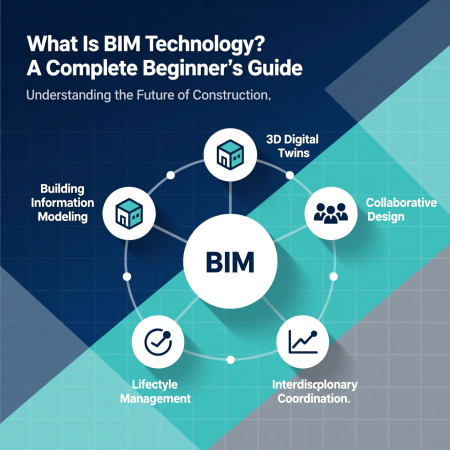
In the ever-evolving landscape of construction and architecture, BIM Technology stands as a transformative force that redefines how we approach building projects. We delve into the core of BIM Technology, exploring its foundational principles and why it has become indispensable in modern design and construction practices. Building Information Modeling, commonly abbreviated as BIM, represents more than just a software tool; it is a comprehensive methodology that integrates digital representations of physical and functional characteristics of buildings and infrastructure. This guide aims to provide beginners with an in-depth understanding, covering everything from basic definitions to advanced applications, ensuring you grasp how BIM Technology enhances efficiency, collaboration, and sustainability across the entire project lifecycle.
We begin by clarifying what BIM Technology truly entails. At its heart, BIM Technology involves creating intelligent 3D models enriched with data that support decision-making from the initial concept through to demolition or renovation. Unlike traditional 2D drawings, which often lead to miscommunications and errors, BIM Technology offers a dynamic, shared platform where architects, engineers, contractors, and owners can interact with a single source of truth. This integration minimizes risks, reduces costs, and accelerates project timelines, making BIM Technology a cornerstone for innovative construction solutions. As we proceed, we will unpack the historical evolution, key components, benefits, and much more, equipping you with the knowledge to appreciate and potentially implement BIM Technology in your endeavors.
Imagine a world where every stakeholder can visualize a building before a single brick is laid. That’s the promise of BIM Technology. We see it applied in skyscrapers, bridges, hospitals, and even residential homes, where precise data-driven models prevent costly rework. For beginners, understanding BIM Technology starts with recognizing its role in bridging the gap between design intent and real-world execution. Throughout this extensive guide, we will use detailed explanations, examples, and visuals to make complex concepts accessible.

The Fundamentals: What Exactly Is BIM Technology?
We now turn our attention to defining BIM Technology in greater detail. BIM Technology, or Building Information Modeling Technology, is a process that utilizes digital tools to create and manage a virtual model of a building or infrastructure project. This model is not merely a 3D visualization but a data-rich database that includes geometric details, spatial relationships, geographic information, quantities, and properties of building components. For instance, a wall in a BIM model isn’t just lines on a screen; it contains information about its material composition, thermal properties, cost, and even maintenance schedules.
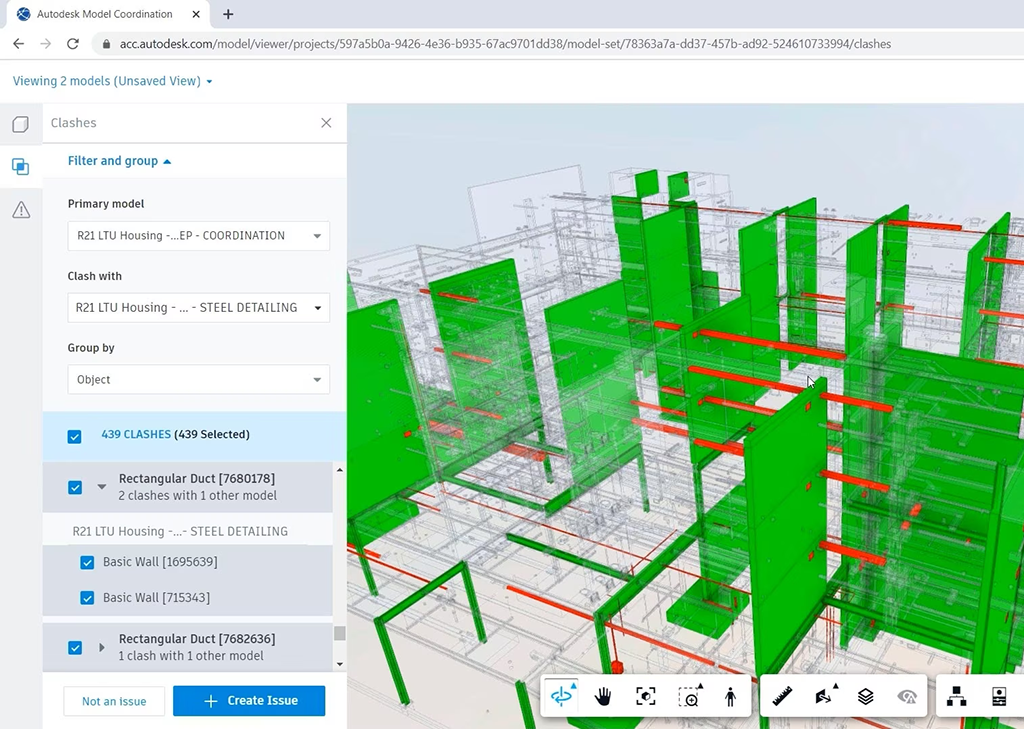
In practice, BIM Technology facilitates a collaborative environment where multiple disciplines—architecture, structural engineering, mechanical, electrical, and plumbing (MEP)—work simultaneously on the same model. This real-time collaboration reduces conflicts, such as when a structural beam intersects with an HVAC duct, which can be detected and resolved virtually rather than on-site. We emphasize that BIM Technology extends beyond design; it encompasses the entire lifecycle, including construction simulation, facility management, and eventual decommissioning.
To illustrate, consider a hospital project where BIM Technology allows medical staff to input requirements for room layouts, ensuring compliance with health regulations from the outset. The model’s data can simulate patient flow, energy consumption, and even emergency evacuations. Such capabilities make BIM Technology invaluable for complex projects, where traditional methods fall short in handling the volume of information required.
Furthermore, BIM Technology incorporates standards like ISO 19650, which guide the organization and digitization of information about buildings and civil engineering works. These standards ensure interoperability between different software platforms, allowing seamless data exchange. For beginners, it’s crucial to note that BIM Technology is not a single software but a methodology supported by various tools, which we will explore later.
We also highlight the distinction between BIM and CAD (Computer-Aided Design). While CAD focuses on drafting 2D or 3D drawings, BIM Technology adds intelligence through parametric modeling, where changes to one element automatically update the entire model. This parametric approach saves countless hours and reduces human error, making projects more predictable and efficient.
Tracing the Roots: The History of BIM Technology
Understanding the history of BIM Technology provides context for its current prominence. We trace its origins back to the 1970s, when early computer-aided design systems began exploring 3D modeling for architectural visualization. Pioneers like Charles Eastman at Carnegie Mellon University introduced concepts of building descriptions that included computable data, laying the groundwork for what would become BIM Technology.
The term “Building Information Modeling” was popularized in the 1990s by Jerry Laiserin, who described it as a process for generating and managing digital representations of places. During this decade, software advancements made 3D modeling more accessible, though adoption was slow due to technological limitations and industry resistance. A pivotal development was the creation of Industry Foundation Classes (IFC) in 1994 by the International Alliance for Interoperability, providing open standards for data exchange in BIM Technology.
By the early 2000s, BIM Technology gained momentum as governments recognized its potential for cost savings and efficiency. In the UK, for example, the government mandated BIM Level 2 for public projects in 2016, aiming to reduce construction costs by 20%. This mandate spurred global adoption, with countries like the US, Australia, and Singapore following suit. The evolution continued with the integration of additional dimensions: 4D for time scheduling, 5D for cost estimation, and beyond.

Key milestones include the release of Autodesk Revit in 2000, which revolutionized parametric modeling, and the NIST report estimating annual losses of $15.8 billion due to inadequate interoperability in the US construction industry, underscoring the need for BIM Technology. Today, BIM Technology is integral to mega-projects like the Sydney Opera House retrofits or the Burj Khalifa, where historical data informs ongoing maintenance.
We note that the Grenfell Tower tragedy in 2017 highlighted the importance of BIM Technology for safety, leading to requirements for a “golden thread” of information in high-risk buildings. This historical perspective shows how BIM Technology has evolved from a niche tool to a standard practice, driven by technological advancements and regulatory pressures.
Breaking It Down: Key Components of BIM Technology
To fully appreciate BIM Technology, we must examine its key components. At the core are BIM Objects, which are digital representations of physical building elements like doors, windows, or beams. These objects contain not only geometric data but also attributes such as material specifications, performance metrics, and lifecycle information. For example, a BIM object for a window might include its U-value for thermal efficiency, manufacturer details, and warranty period.
Another essential component is the BIM Model itself, a comprehensive digital twin that integrates all project data. This model supports multidimensional analysis: 3D for spatial visualization, 4D for scheduling simulations, 5D for cost tracking, 6D for sustainability assessments, 7D for facility management, and even 8D for safety compliance. We see how these dimensions interconnect; a delay in the 4D timeline directly impacts 5D costs, allowing proactive adjustments.
Data management is crucial in BIM Technology, facilitated by a Common Data Environment (CDE), a centralized repository where all stakeholders access and update information in real-time. This ensures version control and reduces discrepancies. Parametric design is another pillar, enabling automatic updates across the model when parameters change, such as resizing a room and instantly recalculating material quantities.
We also consider collaboration tools within BIM Technology, which include cloud-based platforms for remote access and integration with AR/VR for immersive reviews. These components work synergistically to create a robust framework that enhances project outcomes.
Understanding Maturity: Levels of BIM Technology
BIM Technology is often categorized by maturity levels, which indicate the sophistication of implementation. We start with Level 0, where projects rely on 2D CAD drawings with no collaboration, leading to inefficiencies.
Level 1 introduces 3D modeling but still uses separate files for different disciplines, with limited data sharing. At Level 2, mandated in many regions, teams use a common data environment for collaborative 3D models, with each discipline managing its data but sharing through standardized formats like IFC.
Level 3 represents full integration, with a single shared model enabling real-time collaboration across the lifecycle, including facility management. Beyond this, levels extend to Level 4 for social outcomes and Level 5 for commercial aspects, though these are emerging.
In terms of Level of Development (LOD), LOD 100 is conceptual, with basic shapes; LOD 200 adds approximate geometry; LOD 300 includes precise details for construction; LOD 400 for fabrication; and LOD 500 for as-built models. We recommend starting at Level 2 for beginners to balance complexity and benefits.
![BIM Maturity Level., Source: [6] | Download Scientific Diagram](https://www.researchgate.net/publication/320859913/figure/fig1/AS:557328770363392@1509888941171/BIM-Maturity-Level-Source-6.png "What Is BIM Technology? A Complete Beginner’s Guide 4")
Unlocking Value: The Benefits of BIM Technology
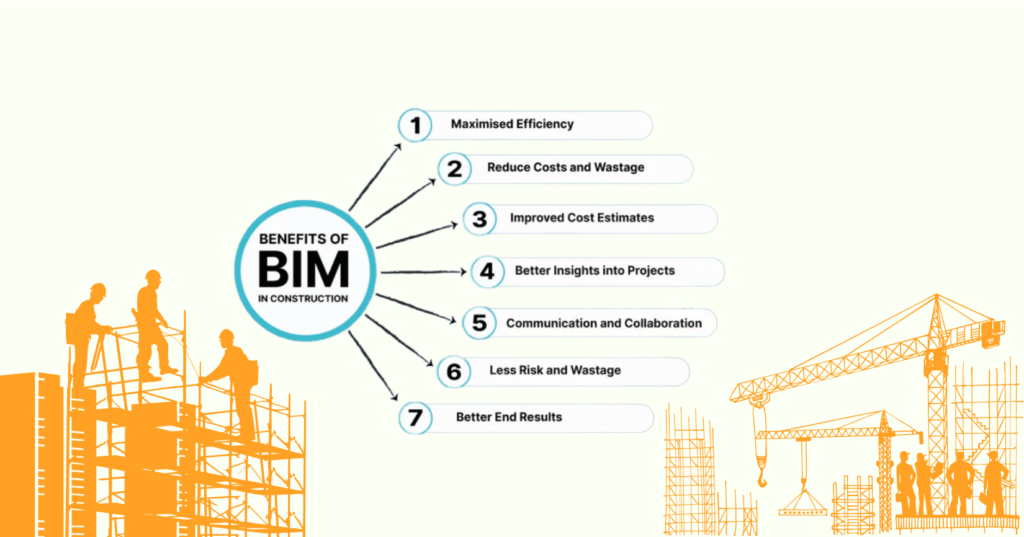
The benefits of BIM Technology are multifaceted, making it a game-changer for the AEC industry. We first highlight improved collaboration, where stakeholders share a single model to detect clashes early, reducing rework by up to 10-20%. For example, in a bridge project, engineers can simulate load distributions while architects refine aesthetics, all within the same platform.
Cost savings are significant; BIM Technology enables accurate quantity takeoffs and cost estimations, potentially cutting expenses by 15-25%. Sustainability is enhanced through energy modeling, optimizing designs for lower carbon footprints. Productivity surges as automation eliminates manual tasks, with McKinsey reporting positive ROI for 75% of adopters.
Risk mitigation is another key benefit, with virtual simulations identifying safety issues before construction. We also note operational efficiencies in facility management, where BIM data informs maintenance, extending asset life. Overall, BIM Technology delivers higher quality projects on time and within budget.
- Enhanced Accuracy: Precise models reduce errors in estimates and construction.
- Better Decision-Making: Data-driven insights support informed choices.
- Sustainability Gains: Optimize resource use and environmental impact.
- Time Efficiency: Streamline schedules with 4D simulations.
Tools of the Trade: BIM Software and Technologies
Selecting the right software is vital for leveraging BIM Technology. We recommend Autodesk Revit for its parametric modeling and integration capabilities, ideal for architectural design. ArchiCAD offers intuitive interfaces for beginners, while Tekla Structures excels in structural engineering.
Navisworks is excellent for clash detection and project review, and Vectorworks caters to landscape and entertainment design. Open-source options like FreeCAD provide cost-effective alternatives. Cloud platforms like Autodesk BIM 360 enable collaboration, with features for issue tracking and document management.
We advise evaluating software based on project needs, scalability, and training requirements. Integration with AR/VR tools further enhances BIM Technology, allowing virtual walkthroughs.
From Concept to Completion: BIM in the Construction Lifecycle
BIM Technology shines throughout the construction lifecycle. In the planning phase, we use it to assess site viability and risks. During design, shared models facilitate iterative refinements. Pre-construction involves detailed documentation and clash resolution.
In construction, BIM Technology supports off-site prefabrication and on-site coordination via mobile apps. For operations, the as-built model aids maintenance, with data on assets like HVAC systems. Deconstruction benefits from accurate material inventories for recycling.
We illustrate with a stadium project, where 4D BIM simulates construction sequences to minimize disruptions.
Step-by-Step: Implementing BIM Technology
Implementing BIM Technology requires a structured approach. We start with assessing organizational readiness, including skills and infrastructure. Develop a BIM Execution Plan (BEP) outlining roles, standards, and workflows.
Train staff through courses and certifications, then select software and establish a CDE. Pilot on small projects to refine processes, scaling up gradually. Monitor performance with KPIs like error reduction and cost savings.
Common pitfalls include inadequate training or resistance to change; we suggest change management strategies to address them.
Overcoming Hurdles: Challenges in Adopting BIM Technology
Despite its advantages, adopting BIM Technology presents challenges. High initial costs for software and training can deter small firms. Resistance from traditional practitioners requires cultural shifts.
Data security is a concern, with risks of breaches in shared environments. Interoperability issues arise if software doesn’t align with standards. We recommend starting small, investing in training, and using secure cloud solutions to mitigate these.
Skilled labor shortages can be addressed through education and partnerships.
Real-World Success: Case Studies in BIM Technology
Case studies demonstrate BIM Technology‘s impact. The Notre Dame Cathedral restoration used laser-scanned BIM models for accurate reconstruction post-fire. In the UK, Kettering General Hospital employed BIM integrated with CAFM for efficient maintenance.
The Linköping Sports Centre in Sweden utilized LOD 200 models for renovations, improving space planning. We see how BIM Technology reduced costs by 15% in these projects through better coordination.

Looking Ahead: Future Trends in BIM Technology
The future of BIM Technology is bright, with integration of AI for predictive analytics, generative design for optimized solutions, and blockchain for secure data. Digital twins will enable real-time monitoring, while AR/VR enhances immersion.
Sustainability will drive 6D BIM for eco-friendly designs. We anticipate wider adoption in smart cities and infrastructure, with global standards evolving.

Getting Started: How to Learn BIM Technology
For beginners, learning BIM Technology begins with basics via online courses on platforms like Coursera or Autodesk. Practice with free software trials, building simple models. Gain certifications like Autodesk Certified Professional.
Join communities for networking and hands-on experience through internships. We suggest 3-6 months for proficiency, focusing on practical projects.
Conclusion: Embracing BIM Technology for Tomorrow’s Builds
In concluding, we reaffirm that BIM Technology is essential for modern construction, offering unparalleled efficiency and innovation. By adopting it, we pave the way for sustainable, collaborative projects.
Suggestions and Recommendations
We recommend starting with a BIM assessment audit for your organization. Invest in training programs and pilot projects. Partner with certified BIM consultants for smooth implementation. Regularly update models for lifecycle benefits. Explore integrations with emerging tech like AI and IoT.
FAQs with Answers
1. What does BIM stand for?
BIM stands for Building Information Modeling, a process for creating and managing digital building representations.
2. How does BIM differ from CAD?
BIM adds data intelligence and parametric features, unlike CAD’s focus on drawings.
3. What are the main benefits of BIM?
Improved collaboration, cost savings, risk reduction, and sustainability.
4. What is a BIM model?
A data-rich 3D digital representation of a building’s physical and functional aspects.
5. What are BIM levels?
They range from Level 0 (2D) to Level 3 (integrated collaboration).
6. Which software is best for BIM?
Autodesk Revit, ArchiCAD, and Tekla are popular choices.
7. How does BIM help in sustainability?
Through energy simulations and material optimization.
8. What is 4D BIM?
It incorporates time for scheduling and simulations.
9. Can small firms use BIM?
Yes, with scalable software and training.
10. What is LOD in BIM?
Level of Development, indicating model detail.
11. How to implement BIM?
Develop a BEP, train staff, and pilot projects.
12. What challenges does BIM face?
Costs, resistance, and interoperability.
13. What is the future of BIM?
Integration with AI, AR, and digital twins.
14. How long to learn BIM?
3-6 months for basics with practice.
15. Is BIM mandatory?
In some countries for public projects, like UK Level 2.