


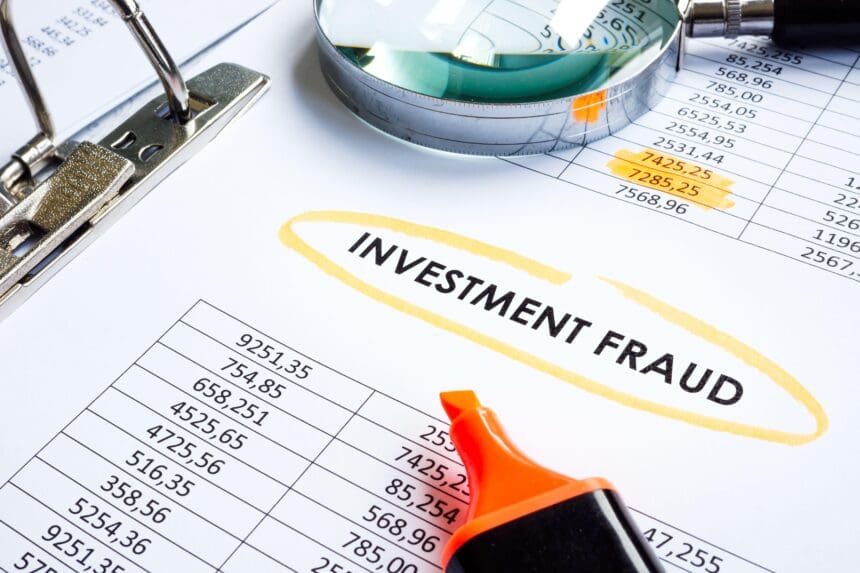
Dubai stands as a global beacon of economic dynamism, architectural marvel, and luxurious living. Its strategic location, business-friendly environment, and tax advantages have attracted significant foreign investment and a diverse expatriate population. This thriving ecosystem, however, also presents fertile ground for unscrupulous actors seeking to exploit the unwary through sophisticated investment scams (Investment Scams in Dubai). While legitimate opportunities abound, the allure of high returns in a seemingly prosperous market can blind investors to the inherent risks posed by fraudulent schemes and high-risk investment firms.
We delve into the complex world of investment scams prevalent in Dubai, examining the tactics employed by fraudsters and providing crucial insights into identifying potentially high-risk firms. Our objective is to equip investors with the knowledge necessary to navigate Dubai’s investment landscape safely, distinguish genuine opportunities from deceptive traps, and understand the mechanisms for protection and recourse. Recognizing the red flags and understanding the operational methodologies of these scams is the first, most critical step in safeguarding capital.
Understanding the Dubai Investment Ecosystem: Opportunity and Risk
Dubai’s economic success story is undeniable. It has successfully diversified away from oil dependency, building robust sectors in tourism, real estate, aviation, logistics, financial services, and technology. The establishment of free zones like the Dubai International Financial Centre (DIFC), Jebel Ali Free Zone (JAFZA), and Dubai Multi Commodities Centre (DMCC) has further streamlined business setup and attracted multinational corporations and entrepreneurs alike. This environment fosters innovation and offers numerous avenues for investment, from publicly traded equities on the Dubai Financial Market (DFM) and Nasdaq Dubai to extensive real estate developments and burgeoning venture capital opportunities.
However, this very attractiveness creates vulnerabilities. The rapid pace of development, the constant influx of new residents and businesses, and the sheer volume of capital flowing through the Emirate can make it challenging for regulators to monitor every entity and transaction effectively. Furthermore, the multicultural environment, while a strength, can sometimes lead to communication barriers or misplaced trust based on shared nationality or background (affinity fraud). Scammers exploit the perception of Dubai as a place where rapid wealth generation is commonplace, preying on investors’ desires for quick and substantial profits. The complexity of cross-border investments and the use of sophisticated financial instruments can also obscure fraudulent activities, making due diligence more critical than ever.

The Regulatory Landscape: DFSA and SCA
Understanding the regulatory framework is paramount for any investor in Dubai. Two primary bodies oversee financial activities:
-
Dubai Financial Services Authority (DFSA): The DFSA is the independent regulator of financial services conducted in or from the Dubai International Financial Centre (DIFC). The DIFC operates under its own legal system based on English common law. The DFSA licenses, supervises, and enforces regulations for firms operating within this specific financial free zone. Its remit covers banking, insurance, securities trading, asset management, Islamic finance, and more. Verifying DFSA licensure is essential for any firm claiming to operate within the DIFC. Their public register is a vital tool for investors.
-
Securities and Commodities Authority (SCA): The SCA is the federal regulator responsible for supervising and monitoring the capital markets outside the financial free zones (i.e., “onshore” Dubai and the other Emirates). It licenses and regulates financial markets (like DFM and ADX), brokerage firms, asset managers, financial consultants, and public companies listing their shares. Checking the SCA’s public register is crucial for firms operating onshore in Dubai.
It is critically important to note that a company merely having a trade license from the Dubai Department of Economy and Tourism (DET) or a free zone authority (other than DIFC for financial services) does not authorize it to offer or conduct investment activities. Financial services require specific licensing from either the DFSA (within DIFC) or the SCA (onshore). Many scams involve entities holding a basic trade license while illegally promoting investments.
Defining Investment Scams: Recognizing the Deception
An investment scam, at its core, is any scheme designed to defraud investors by misrepresenting an investment opportunity. These scams promise returns, security, or legitimacy that does not exist, with the primary goal of misappropriating the invested funds. While the specifics vary, common elements include deception, misrepresentation, and the ultimate loss of investor capital. Understanding the common typologies is key to early identification.
Common Types of Investment Scams Encountered in Dubai
-
Ponzi Schemes: Named after Charles Ponzi, these schemes rely on using funds from new investors to pay purported “returns” to earlier investors, rather than generating legitimate profits from any actual business activity. They create an illusion of success that attracts more victims. These schemes inevitably collapse when the inflow of new money cannot sustain the promised payouts or when the orchestrator disappears with the funds. Red flags include exceptionally high and consistent returns, regardless of market conditions, and difficulty withdrawing principal amounts.
-
Pyramid Schemes: Similar to Ponzi schemes in their reliance on new recruits, pyramid schemes primarily focus on rewarding participants for bringing in new members rather than on the sale of any actual product or service (or the product/service is merely a facade). The structure requires exponential growth, making it mathematically unsustainable. Those at the top benefit, while the vast majority at the bottom inevitably lose their money when recruitment dries up. Often disguised as multi-level marketing (MLM) opportunities, the key differentiator is the emphasis on recruitment fees over actual retail sales.
-
Boiler Room Operations: These involve high-pressure sales tactics, typically conducted via telephone or email by teams of salespeople (often unlicensed) operating from low-cost premises (the “boiler room”). They aggressively push speculative or worthless investments, such as penny stocks, private placements in non-existent companies, or other obscure opportunities, using persuasive scripts, creating false urgency, and downplaying risks. They often target victims repeatedly and make it difficult to sell the acquired “investments.”
-
Forex and CFD Scams: The foreign exchange (Forex) and Contracts for Difference (CFD) markets, while legitimate, are high-risk and attract numerous scams. These include:
-
Unregulated Brokers: Firms operating without proper licensing from reputable regulators (like DFSA, SCA, or equivalent bodies in major jurisdictions like FCA, ASIC, CySEC). They may manipulate trading platforms, refuse withdrawals, or simply disappear with client funds.
-
Signal Seller Scams: Individuals or companies promising highly accurate trading signals for a fee, often showcasing falsified track records. The signals rarely perform as advertised.
-
Managed Account Scams: Offering to trade on the investor’s behalf with promises of guaranteed high returns, often leading to the account being quickly depleted through excessive trading (churning) or outright theft.
-
Fake Trading Robots/Expert Advisors (EAs): Selling automated trading software purported to generate effortless profits, which typically fails to perform or is designed to lose money.
-
-
Cryptocurrency Scams: The relatively new and often poorly understood world of digital assets is rife with fraud. Common schemes include:
-
Fraudulent Initial Coin Offerings (ICOs) / Initial Exchange Offerings (IEOs): Raising funds for non-existent projects or tokens with no real value or utility.
-
Pump-and-Dump Schemes: Artificially inflating the price of a low-value coin through coordinated buying and misleading promotion, then selling off (dumping) shares as unsuspecting investors buy in at the peak.
-
Fake Exchanges and Wallets: Creating websites or apps that mimic legitimate cryptocurrency exchanges or wallets to steal login credentials or deposited funds.
-
Imposter Scams: Posing as legitimate crypto platforms or support staff to trick users into revealing private keys or sending crypto to fraudulent addresses.
-
Cloud Mining Scams: Offering shares in cryptocurrency mining operations that don’t actually exist or don’t deliver the promised returns.
-
-
Real Estate Investment Scams: Dubai’s dynamic property market is a prime target. Scams can involve:
-
Off-Plan Property Fraud: Selling developments that are never built or significantly delayed, with developers disappearing with deposit money. Lack of RERA registration and escrow account usage are major red flags.
-
Title Deed Fraud: Forging ownership documents to sell or mortgage properties without the real owner’s knowledge.
-
Rental Scams Masquerading as Investments: Offering high guaranteed rental returns on properties that are overpriced, in poor locations, or difficult to rent out legally.
-
Fractional Ownership Scams: Selling shares in properties with misleading valuations or complex structures that make exit difficult or impossible.
-
-
Advance Fee Fraud: Convincing victims they are entitled to a large sum of money (e.g., inheritance, lottery winnings, investment profits) but must first pay various fees (taxes, processing charges, legal fees) before the funds can be released. The promised payout never materializes.
-
Recovery Room Scams: Targeting previous scam victims, these fraudsters claim they can recover the lost funds for an upfront fee. This is simply a secondary scam preying on the victim’s desperation.
Anatomy of a Dubai Investment Scam: Common Tactics Unveiled
Scammers operating in or targeting Dubai investors often employ a recognizable playbook. Awareness of these tactics is crucial for self-protection:
-
The Promise of Unrealistic High Returns: This is the most universal red flag. Legitimate investments carry risk, and returns are typically correlated with that risk and prevailing market conditions. Guarantees of exceptionally high, quick, or risk-free profits (e.g., “double your money in 3 months,” “guaranteed 25% annual return”) are almost always indicative of a scam. Scammers exploit greed and the desire for financial shortcuts.
-
High-Pressure Sales Tactics: Creating a false sense of urgency (“limited time offer,” “only a few spots left,” “price is about to go up”) to rush investors into making decisions without proper thought or due diligence. They may become aggressive, dismiss concerns, or use emotional manipulation. Legitimate advisors allow time for consideration and independent research.
-
Operating Without Proper Licensing: As discussed, offering financial services or investments in Dubai requires specific licensing from the DFSA (within DIFC) or the SCA (onshore). Scammers often operate without these licenses, perhaps only holding a basic trade license, or falsely claiming registration with obscure, irrelevant, or non-existent regulatory bodies. Always verify licensure through the official public registers of the relevant authority.
-
Leveraging Dubai’s Prestigious Image: Scammers often use glossy brochures, sophisticated websites, and prestigious-sounding Dubai addresses (sometimes virtual offices) to create an illusion of legitimacy and success, associating their fraudulent scheme with the Emirate’s overall prosperity.
-
Complexity and Obfuscation: Using complex financial jargon, convoluted investment structures, or overwhelming technical details to confuse investors and discourage probing questions. If you cannot understand the investment and the associated risks clearly, it is a major warning sign.
-
Affinity Fraud: Exploiting trust within specific communities, such as expatriate groups, religious organizations, or professional associations. Scammers infiltrate these groups, build rapport, and then pitch their fraudulent scheme to members, relying on shared background or connections to lower defenses.
-
Fake Testimonials and Endorsements: Using fabricated success stories, paid actors, or even falsely claiming endorsements from reputable individuals or publications to build credibility. Be skeptical of overly positive reviews, especially if they lack specific details or seem generic.
-
Lookalike Websites and Documents: Creating websites, emails, and documents that closely mimic those of legitimate financial institutions or government bodies. Pay close attention to domain names (minor variations can indicate fraud), logos, and communication styles. Always verify contact details independently, not just from the communication received.
-
Difficulty Accessing Funds: Scammers often make it easy to deposit money but create numerous hurdles, delays, unexpected fees, or outright refusals when investors attempt to withdraw their principal or supposed profits. This is a classic sign of Ponzi schemes or brokers intending to steal funds.
-
Unsolicited Contact: Receiving unexpected calls, emails, or social media messages promoting investment opportunities is a common tactic used by boiler rooms and other scammers. Legitimate firms rarely engage in cold outreach for investment products.
Identifying High-Risk Investment Firms: Red Flags to Watch For
Beyond recognizing scam tactics, investors must critically evaluate any firm offering investment opportunities in Dubai. Certain characteristics strongly indicate a high-risk profile, significantly increasing the likelihood of encountering fraud or mismanagement:
-
Lack of Verifiable Regulatory Authorization: This is the most critical factor. Does the firm explicitly state which body regulates it (DFSA or SCA) for the specific activity being offered? Can you find the firm listed on the official public register of that regulator with the correct permissions? Be wary of claims like “registered in Dubai” (which could just mean a basic trade license) or regulation by bodies in remote offshore jurisdictions with weak oversight. Absence of clear, verifiable DFSA or SCA licensing for investment services is a major red flag.
-
Unclear or Unsustainable Business Model: How does the firm supposedly generate the promised high returns? Is the underlying business model logical, transparent, and sustainable in real-world market conditions? If the explanation is vague, overly complex, relies on secret formulas, or seems too good to be true, exercise extreme caution. Ponzi schemes, by definition, lack a legitimate business model.
-
Offshore Jurisdictions with Weak Regulation: While not inherently fraudulent, firms heavily relying on registration in jurisdictions known for lax financial oversight (e.g., some Caribbean islands, Pacific nations) warrant increased scrutiny, especially if they are actively marketing to Dubai residents without local authorization. It can be extremely difficult to pursue legal action or recover funds from entities based in such locations.
-
Guaranteed High Returns: As previously mentioned, guarantees of high returns that significantly exceed market benchmarks for similar risk profiles are a hallmark of scams. Legitimate investments involve risk, and returns fluctuate.
-
Excessive Pressure to Invest: Reputable firms provide information and allow investors time to conduct due diligence and seek independent advice. Firms using high-pressure tactics, demanding immediate decisions, or discouraging questions are highly suspect.
-
Vague or Incomplete Documentation: Investment prospectuses, contracts, and term sheets should be clear, comprehensive, and outline all risks, fees, and procedures. Be wary of documents that are poorly written, lack specific details, contain contradictory information, or seem overly promotional rather than factual. Ensure you understand all terms and conditions before signing anything or transferring funds.
-
Barriers to Withdrawal: Difficulty or delays in withdrawing funds, excessive paperwork requirements for redemptions, or the imposition of unexpected fees or conditions for accessing capital are strong indicators of potential fraud or insolvency. Test the withdrawal process early with a small amount if possible (though scammers may allow small initial withdrawals to build trust).
-
Negative Online Reviews and Warnings: While online reviews can be manipulated, consistent patterns of complaints regarding withdrawal problems, lack of communication, misrepresentation, or regulatory warnings from financial authorities should be taken very seriously. Search for the company name along with terms like “scam,” “fraud,” “complaint,” “warning,” or “review.” Check official warning lists published by regulators like the DFSA and SCA.
-
Lack of Physical Presence or Transparency: While virtual offices are common, a complete lack of a verifiable physical presence, opaque corporate structures, or difficulty identifying the key individuals behind the firm can be red flags. Legitimate businesses are generally transparent about their operations and leadership.
-
Requirement for Unusual Payment Methods: Requests to send investment funds via cryptocurrency, wire transfers to unrelated third-party accounts, or other non-standard, difficult-to-trace methods should raise immediate suspicion. Legitimate firms typically have standard banking channels.
Spotlight on High-Risk Sectors in Dubai
While scams can occur in any sector, certain areas in Dubai have historically seen a higher concentration of fraudulent activity due to market dynamics, complexity, or investor psychology.
Navigating the Risks in Dubai Real Estate Investments
Dubai’s property market offers significant opportunities but requires extreme diligence. The allure of luxury developments and potential capital appreciation attracts global investors, but also fraudsters.
-
Off-Plan Developments: Investing before construction is complete (off-plan) can offer lower prices but carries risks. Key Due Diligence:
-
Verify Developer Registration: Ensure the developer is registered with the Dubai Land Department (DLD) and the Real Estate Regulatory Agency (RERA).
-
Confirm Project Registration: The specific project must also be registered with RERA.
-
Mandatory Escrow Account: RERA mandates that off-plan payments be held in a project-specific escrow account, monitored by an approved trustee bank. Funds should only be released to the developer upon meeting construction milestones. Never pay directly to the developer’s general account. Verify the escrow account details independently with RERA or the DLD.
-
Sales and Purchase Agreement (SPA): Review the SPA meticulously, preferably with legal counsel familiar with Dubai property law. Pay attention to payment schedules, completion dates, penalty clauses, and handover conditions.
-
Track Record: Research the developer’s history of completed projects and delivery timelines.
-
-
Title Deed Verification: When buying resale properties, ensure the seller has clear title. Verify ownership through the DLD’s official channels (e.g., Dubai REST app). Use a reputable, RERA-registered real estate broker and a qualified conveyancer or lawyer. Beware of fake documents or individuals impersonating owners.
-
Guaranteed Rental Return Schemes: Be highly skeptical of schemes offering unusually high guaranteed rental returns (often significantly above market rates). These are frequently used to inflate property prices. The guarantees may only last a short period, be difficult to enforce, or the property itself may be undesirable for actual tenants, leaving the investor with an overpriced, vacant unit once the guarantee expires. Research comparable rental rates in the area independently.
-
Fractional Investment Scams: While legitimate fractional ownership exists, scams involve opaque structures, inflated property valuations, high hidden fees, and limited or no exit options. Understand exactly what you are buying, how the property is managed, how income (and expenses) are distributed, and what the resale process entails.
Forex, CFD, and Unregulated Trading Platforms
The fast-paced, high-leverage nature of Forex and CFD trading attracts both sophisticated traders and novice investors, making it a prime target for scams.
-
The Criticality of Regulation: The single most important factor is regulation. Only deal with brokers explicitly licensed and regulated by the DFSA (if operating from DIFC) or the SCA (if operating onshore), or by reputable regulators in major financial centers (e.g., FCA UK, ASIC Australia, CySEC Cyprus – but verify their authorization allows them to onboard UAE residents). Many brokers operate globally under offshore licenses (e.g., Vanuatu, St. Vincent & the Grenadines) which offer minimal investor protection and recourse. Avoid unregulated brokers entirely.
-
Verifying Broker Credentials:
-
Check the broker’s website for clear disclosure of their regulatory licenses and license numbers.
-
Independently verify these details on the regulator’s official public register. Do not trust claims on the broker’s site alone.
-
Be wary of brokers claiming regulation but operating through different offshore entities for client onboarding. Ensure your account is actually held with the regulated entity.
-
-
Unrealistic Profit Promises: Forex and CFD trading involves substantial risk. Promises of guaranteed profits, exceptionally high win rates from signals, or effortless wealth through automated systems (robots/EAs) are deceptive. Reputable brokers provide clear risk warnings.
-
Platform Manipulation: Unregulated brokers may manipulate price feeds, execute trades at unfavorable prices (slippage), or disable trading during volatile periods to disadvantage clients.
-
Withdrawal Issues: Refusal or significant delays in processing withdrawal requests are common tactics used by scam brokers. Search for online reviews specifically mentioning withdrawal experiences.
-
Managed Accounts and Signal Providers: Be extremely cautious of services offering to trade for you or provide signals. Verify their track records independently (if possible, which is often difficult as records can be faked). Understand their fee structures (performance fees can incentivize excessive risk-taking). Many are simply scams designed to churn accounts or sell useless information.
Cryptocurrency Investment Risks in Dubai
The excitement surrounding cryptocurrencies has led to a surge in related scams. Regulation in this space is still evolving globally and in the UAE. While Dubai is positioning itself as a crypto hub with bodies like the Virtual Assets Regulatory Authority (VARA) establishing frameworks, the market remains high-risk.
-
Understanding VARA’s Role: VARA is responsible for regulating Virtual Assets and Virtual Asset Service Providers (VASPs) throughout Dubai (excluding the DIFC, which has its own framework under DFSA). Firms dealing with crypto-assets (exchanges, brokers, custody providers) require VARA authorization to operate legally. Verify any platform targeting Dubai users against VARA’s register.
-
Common Crypto Scams:
-
Rug Pulls: Developers launch a token, attract investment, then abandon the project and disappear with the funds, often by draining the liquidity pool. Common in the Decentralized Finance (DeFi) space.
-
Fake Exchanges/Wallets: Phishing sites or malicious apps designed to steal credentials or private keys. Always double-check URLs and download apps only from official stores. Use hardware wallets for significant holdings.
-
Impersonation Giveaways: Scammers impersonating celebrities (like Elon Musk) or exchanges on social media, promising to double any crypto sent to their address. These are always scams.
-
Pump-and-Dump Schemes: Coordinated efforts to inflate the price of obscure altcoins through social media hype, then selling off before the price crashes. Avoid coins heavily promoted by unknown influencers promising rapid gains.
-
Fraudulent Mining Schemes: Cloud mining contracts that offer unrealistic returns or simply don’t have the underlying mining hardware. Legitimate mining is capital-intensive and returns are variable.
-
-
Due Diligence is Paramount:
-
Research the Project: For ICOs or token investments, research the team, the technology, the use case, and the tokenomics. Read the whitepaper critically. Is there a real product or just hype?
-
Use Reputable Platforms: Stick to well-established exchanges that are compliant with regulations (like VARA or DFSA).
-
Secure Your Assets: Use strong, unique passwords, enable two-factor authentication (2FA), and understand private key management. Be wary of unsolicited offers or requests for your keys/seed phrases.
-
Beware of Social Media Hype: Much crypto promotion on platforms like Twitter, Telegram, and Discord is driven by paid influencers or scammers. Be deeply skeptical.
-
Scams in Alternative Investments
Beyond the main categories, scams can appear in various “alternative” investment areas:
-
Precious Metals/Commodities: Schemes involving overpriced gold, silver, or other commodities, often with storage fees or delivery issues. Sometimes linked to high-pressure boiler rooms. Verify dealer reputation and pricing against market rates.
-
Private Equity/Venture Capital: Unsolicited offers to invest in private companies (often start-ups) that are misrepresented or non-existent. These are typically high-risk even when legitimate and usually only suitable for sophisticated investors. Verify claims independently.
-
Renewable Energy/Niche Schemes: Investments pitched in solar farms, forestry, carbon credits, or other niche areas promising high, stable returns. While legitimate opportunities exist, scammers exploit the positive narrative. Due diligence on the company, the project specifics, and the regulatory approvals is vital.
The Indispensable Role of Due Diligence
We cannot overstate the importance of thorough due diligence before committing funds to any investment, especially in a dynamic market like Dubai. Relying solely on a salesperson’s pitch or a glossy brochure is a recipe for potential disaster.
Essential Steps for Investor Due Diligence in Dubai
-
Verify Regulatory Status:
-
Identify the Regulator: Determine if the firm should be regulated by the DFSA (if in DIFC) or the SCA (if onshore).
-
Check Public Registers: Search the official online public registers of the relevant regulator (DFSA website, SCA website) for the firm’s name and specific permissions. Ensure the permissions cover the type of investment being offered.
-
Beware of Similar Names: Scammers sometimes use names very close to legitimate firms (clone firms). Verify all contact details against the official register.
-
Question Offshore Regulation: If the firm cites only regulation in a remote offshore jurisdiction, understand the limited protection it offers and question why they lack local UAE authorization if marketing here.
-
-
Research the Firm and Individuals:
-
Company History: How long has the firm been operating? What is its track record?
-
Leadership Team: Who are the directors and key managers? Research their backgrounds, experience, and reputation using professional networks like LinkedIn and general web searches. Look for any red flags like past involvement in failed or fraudulent ventures.
-
Physical Address: Verify their stated address. Is it a genuine office or just a mail-forwarding service or virtual office?
-
Online Presence: Review their website critically. Does it look professional? Is information clear and comprehensive? Search for independent reviews, news articles, and forum discussions about the firm (bearing in mind reviews can be faked). Look for warnings on regulatory websites globally.
-
-
Understand the Investment:
-
Mechanism: How does the investment actually work? How does it generate returns?
-
Risks: What are the specific risks involved? Be wary of any investment presented as “risk-free.” Understand market risk, liquidity risk, credit risk, operational risk, etc.
-
Fees and Charges: Get a clear, written breakdown of all fees – initial charges, ongoing management fees, performance fees, exit penalties, etc. Understand how these impact potential returns.
-
Liquidity: How easily and quickly can you access your money if needed? Are there lock-in periods or penalties for early withdrawal?
-
-
Seek Independent Professional Advice:
-
Consult a licensed and independent financial advisor who is not affiliated with the company promoting the investment. They can help assess the suitability of the investment for your risk tolerance and financial goals and spot potential red flags. Ensure the advisor is also appropriately licensed (DFSA or SCA).
-
For property investments, consult an independent lawyer specializing in Dubai real estate law to review contracts (SPA).
-
-
Read All Documentation Carefully:
-
Never sign anything you don’t fully understand. Read the prospectus, terms and conditions, subscription agreements, and any other contracts meticulously.
-
Pay attention to the fine print, especially regarding risks, fees, and withdrawal procedures.
-
If anything is unclear or seems contradictory, demand clarification in writing.
-
-
Be Skeptical of Unsolicited Offers: Treat any investment opportunity that comes via cold calls, unsolicited emails, or social media messages with extreme suspicion.
-
Trust Your Instincts: If something feels wrong, seems too good to be true, or you feel pressured, walk away. There are plenty of legitimate investment opportunities; there is no need to rush into a potentially high-risk situation.
-
Use Secure Payment Methods: Pay investment funds only through official, traceable channels directly to the regulated entity’s corporate bank account. Avoid unusual payment methods like cryptocurrency transfers, payments to personal accounts, or third-party processors.
Hypothetical Case Studies: Learning from Scenarios
To illustrate how these scams operate in practice, let us consider some anonymized, hypothetical scenarios based on common typologies observed in Dubai:
-
Scenario 1: The Unregulated Forex Broker
-
An investor, “Mr. Khan,” is attracted by online ads for “FX Success Dubai,” promising 30% monthly returns through Forex trading. The website looks professional, mentions a Dubai office (a virtual office address), and claims regulation by an entity in St. Vincent & the Grenadines. They offer a managed account service. Mr. Khan deposits $10,000. Initial statements show impressive gains. When he tries to withdraw $5,000 after two months, the request is delayed with various excuses. Eventually, communication ceases, the website goes offline, and his funds are lost. Red Flags: Unrealistic returns, regulation by a weak offshore body (not DFSA/SCA), virtual office, withdrawal problems.
-
-
Scenario 2: The Off-Plan Property Scam
-
“Ms. Chen” sees a presentation for a luxurious off-plan apartment in a new Dubai development, “Desert Pearl Towers,” promoted by “Prestige Properties Global.” They offer a discount for early investors and guarantee 10% rental returns for 3 years post-completion. They pressure her to sign the SPA quickly and ask for a 20% deposit paid directly to Prestige Properties Global’s account, not an escrow account. Months later, there is no sign of construction, the developer’s representatives are unreachable, and RERA confirms the project was never properly registered, nor was an escrow account established. Ms. Chen loses her deposit. Red Flags: High pressure, payment directly to developer (not escrow), lack of verifiable RERA registration/escrow account, possibly unrealistic rental guarantee used as bait.
-
-
Scenario 3: The Crypto ‘Pump and Dump’
-
“Mr. Singh” joins a Telegram group promoting a new cryptocurrency, “DubaiCoin (DBC).” Influencers in the group share charts showing rapid price increases and promise it will be the next Bitcoin. They urge members to buy quickly before it lists on major exchanges. Mr. Singh invests $5,000 through a decentralized exchange. The price briefly spikes, then plummets as the initial promoters sell off their holdings. The coin becomes virtually worthless, and the Telegram group disappears. Red Flags: Social media hype, promise of quick exponential gains, pressure to buy fast, focus on an obscure coin with little real utility.
-
-
Scenario 4: The Affinity Fraud Investment Club
-
Within a specific expatriate community group, a charismatic individual, “Mr. David,” starts an informal “investment club.” He claims to have exclusive access to high-return opportunities (private equity, pre-IPO shares) through his connections. He shows initial members falsified statements demonstrating high returns. Trusting Mr. David because he’s ‘one of them,’ more members invest significant sums. For a while, small withdrawal requests are honored using new investors’ money (a Ponzi structure). Eventually, Mr. David disappears with the bulk of the funds. Red Flags: Exploiting community trust, exclusivity claims, lack of transparency/regulation, reliance on charisma over verifiable facts, difficulty getting larger sums out.
-
These scenarios highlight the diverse methods used by scammers and underscore the necessity of applying the due diligence steps outlined previously, regardless of how convincing the pitch or trusted the source may initially seem.
Reporting Investment Scams in Dubai: Taking Action
If you suspect you have encountered or fallen victim to an investment scam in Dubai, it is crucial to report it to the relevant authorities. While recovery of funds can be challenging, reporting helps authorities track fraudulent activities, potentially warn other investors, and take enforcement action against perpetrators.
Where to Report Suspected Scams:
-
Dubai Police: For any suspected fraud or criminal activity, file a report with the Dubai Police. This can often be done online through their website or app, or by visiting a police station. Provide as much detail and evidence (documents, communications) as possible.
-
Dubai Financial Services Authority (DFSA): If the scam involves a firm claiming to operate from or be licensed within the DIFC, report it directly to the DFSA. They have dedicated channels for complaints and whistleblowing accessible via their website. They also maintain an Alert List of firms falsely claiming DFSA regulation or association.
-
Securities and Commodities Authority (SCA): If the scam involves a firm operating onshore in Dubai (outside the DIFC) or concerns activities related to UAE public markets, report it to the SCA. Their website provides information on submitting complaints. They also issue warnings about unlicensed firms.
-
Central Bank of the UAE (CBUAE): If the scam involves unauthorized banking activities or illicit money transfers, the CBUAE may be a relevant authority, particularly concerning banks or payment processors potentially facilitating the fraud.
-
Dubai Department of Economy and Tourism (DET) / Relevant Free Zone Authority: While not financial regulators, if a firm is using a basic trade license fraudulently to promote investments, reporting it to the licensing authority (DET for mainland, or the specific free zone authority) can sometimes lead to administrative action against their license.
-
Your Home Country Regulator: If you invested from abroad or the scam involves cross-border elements, report the matter to the financial conduct authority or securities regulator in your own country. They may liaise with UAE authorities or issue warnings.
-
Action Fraud (UK) or equivalent bodies: If the scam has links to other jurisdictions (e.g., UK boiler rooms targeting Dubai residents), reporting to bodies like Action Fraud can be beneficial.
Information to Provide When Reporting:
-
Name of the suspected fraudulent firm and individuals involved.
-
Contact details used by the firm (website, email, phone numbers).
-
Detailed description of the investment offered and the sales pitch.
-
Dates and amounts of any funds transferred.
-
Copies of all relevant documentation (contracts, brochures, emails, communication logs).
-
Details of bank accounts used for transactions.
-
Any reasons for suspecting fraud (e.g., withdrawal issues, unrealistic promises, lack of regulation).
Protecting Yourself: A Proactive Approach to Investment Security
Ultimately, the best defense against investment scams is a proactive and skeptical approach.
-
Educate Yourself: Continuously learn about different types of investments, market risks, and common scam tactics. The more knowledgeable you are, the harder it is for scammers to deceive you.
-
Be Skeptical: Approach any unsolicited investment offer or promise of unusually high returns with deep skepticism. Remember the adage: If it sounds too good to be true, it probably is.
-
Verify Everything: Independently verify regulatory licenses, company details, and investment specifics. Do not rely solely on information provided by the promoter.
-
Resist Pressure: Never be rushed into making an investment decision. Take your time to do thorough research and seek independent advice.
-
Protect Personal Information: Be cautious about sharing sensitive personal or financial information online or over the phone.
-
Use Secure Connections: Ensure you are using secure internet connections when accessing financial accounts or making transactions. Beware of phishing emails or fake websites.
-
Diversify Investments: Avoid putting all your capital into a single investment, especially if it is high-risk or unregulated. Diversification can mitigate losses if one investment fails. (Note: Diversification does not protect against outright fraud in a single scheme).
-
Start Small (If Applicable): If exploring a new platform or broker (after thorough verification), consider starting with a small amount you can afford to lose to test their processes, especially withdrawals.
-
Stay Informed: Keep abreast of warnings and alerts issued by regulators like the DFSA, SCA, and international bodies.
The Evolving Landscape: Dubai’s Commitment to Investor Protection
Recognizing the reputational risk posed by financial crime, UAE authorities, including those in Dubai, are continually working to strengthen the regulatory environment and combat illicit activities. Initiatives include:
-
Enhanced Regulatory Frameworks: Ongoing updates to regulations by bodies like the DFSA, SCA, and VARA to address emerging risks in areas like virtual assets and financial technology (FinTech).
-
Increased Enforcement: Authorities are stepping up surveillance and enforcement actions against unlicensed operators and fraudulent schemes.
-
Inter-Agency Cooperation: Improved collaboration between different regulatory bodies, law enforcement, and financial intelligence units to share information and coordinate actions.
-
Public Awareness Campaigns: Efforts by regulators to educate the public about investment risks and common scams.
-
Technological Solutions: Exploring and implementing RegTech (Regulatory Technology) solutions to improve market supervision and detect suspicious activities more effectively.
Despite these efforts, the dynamic nature of financial markets and the ingenuity of scammers mean that risks will always remain. Vigilance and due diligence on the part of the investor remain the most critical components of protection. Dubai’s continued success as a global financial hub depends not only on attracting investment but also on ensuring a safe and transparent environment for those who choose to participate in its opportunities. By understanding the risks, recognizing the red flags, and adhering to rigorous due diligence practices, investors can significantly enhance their chances of navigating the Dubai investment landscape successfully and avoiding the pitfalls of high-risk firms and fraudulent schemes.
Conclusion
Dubai presents a compelling proposition for investors, offering access to a vibrant and growing economy. However, this very dynamism attracts not only legitimate opportunities but also sophisticated scams and high-risk ventures preying on unwary capital. We have explored the critical importance of understanding the regulatory environment governed by the DFSA and SCA, differentiating legitimate operations from those lacking proper authorization. Recognizing the common typologies of scams – from Ponzi schemes and boiler rooms to deceptive practices in real estate, Forex, and cryptocurrency – is essential.
The tactics employed by fraudsters, including promises of unrealistic returns, high-pressure sales, leveraging Dubai’s image, and operating without licenses, must be met with informed skepticism. Identifying high-risk firms requires diligent verification of regulatory status, scrutiny of business models, assessment of documentation clarity, and awareness of warning signs like withdrawal difficulties or negative reviews.
Particular vigilance is required in sectors like real estate (verifying RERA registration and escrow accounts), Forex trading (insisting on reputable regulation), and the burgeoning crypto-asset market (verifying VARA authorization and researching projects thoroughly). The cornerstone of protection remains comprehensive due diligence: verifying licenses, researching firms and individuals, understanding the investment intricacies, seeking independent advice, and meticulously reviewing all documentation.
Should suspicion arise or victimization occur, promptly reporting to authorities like the Dubai Police, DFSA, and SCA is crucial. Ultimately, safeguarding investments in Dubai hinges on investor education, proactive skepticism, and an unwavering commitment to verification before committing capital. While regulators strive to enhance protections, the investor’s own diligence is the first and most effective line of defense against the persistent threat of investment fraud.
FAQ
-
Q: How can I verify if an investment company in Dubai is legitimate?
-
A: The most critical step is to check its regulatory status. If the company claims to operate within the Dubai International Financial Centre (DIFC), verify its license and permitted activities on the DFSA’s public register (www.dfsa.ae). If it operates onshore in Dubai (outside DIFC), verify its license and permissions on the SCA’s public register (www.sca.gov.ae). A standard trade license from DET or another free zone authority is not sufficient for offering investments. Perform thorough due diligence on the company’s background, leadership, and track record, and seek independent financial advice.
-
-
Q: What are the biggest red flags for an investment scam in Dubai?
-
A: Key red flags include: promises of unrealistically high or guaranteed returns; lack of verifiable DFSA or SCA regulation for investment activities; high-pressure sales tactics urging immediate decisions; difficulty understanding the investment or how it generates profit; operating primarily from offshore jurisdictions with weak oversight; problems or delays when trying to withdraw funds; and unsolicited contact promoting the investment.
-
-
Q: Are investments in Dubai real estate safe?
-
A: Dubai real estate offers genuine opportunities but also carries risks, including scams. For off-plan properties, safety increases significantly if the developer and project are registered with RERA and payments are made into a RERA-approved escrow account. For resale properties, verify ownership and title deeds through the Dubai Land Department (DLD). Be extremely wary of guaranteed rental return schemes that seem too good to be true. Always use licensed brokers and seek legal advice on contracts.
-
-
Q: I was contacted by a Forex broker promising high profits. How do I know if they are trustworthy?
-
A: Extreme caution is needed. Verify if the broker is regulated by the DFSA (if in DIFC) or SCA (if onshore). Check their public register independently. Many online Forex/CFD brokers targeting Dubai residents are regulated only in weakly supervised offshore locations or not at all – avoid these. Be skeptical of high profit promises, managed accounts, signal services, or trading robots. Search for independent reviews focusing on withdrawal experiences and regulatory compliance.
-
-
Q: Is cryptocurrency investment regulated in Dubai?
-
A: Yes, regulation is developing. The Virtual Assets Regulatory Authority (VARA) regulates virtual asset activities and service providers (exchanges, brokers, etc.) in Dubai (excluding the DIFC). The DFSA regulates virtual asset activities within the DIFC. Only deal with platforms licensed by the appropriate regulator (VARA or DFSA). The crypto market remains highly volatile and prone to scams like rug pulls and fake platforms, so extreme diligence and technical understanding are required.
-
-
Q: What should I do if I think I’ve been scammed?
-
A: Cease all contact and further payments to the suspected scammers. Gather all documentation and communication records. Report the incident immediately to the Dubai Police. Also, report it to the relevant financial regulator (DFSA if DIFC-related, SCA if onshore-related). If applicable, report to your home country’s regulator and your bank (to potentially block payments or flag accounts).
-
-
Q: Can I recover money lost in an investment scam in Dubai?
-
A: Recovering funds lost to scams can be very difficult, especially if the perpetrators are based overseas or have dissipated the money. While authorities will investigate, recovery is not guaranteed. Reporting is still crucial for potential enforcement action and preventing others from being victimized. Be extremely wary of “recovery room” scams that promise to get your money back for an upfront fee – these are almost always secondary scams.
-
-
Q: What is the difference between DFSA and SCA regulation?
-
A: The DFSA regulates financial services conducted within the geographical boundaries of the Dubai International Financial Centre (DIFC), which operates under its own legal framework based on English common law. The SCA is the federal regulator for financial markets and licensed firms operating outside the DIFC (i.e., onshore Dubai and the other Emirates), operating under UAE federal law. You must check with the correct regulator based on where the firm claims to be operating and licensed.
-
-
Q: Are ‘Investment Clubs’ or private investment groups safe?
-
A: Informal investment clubs or groups carry significant risks. They often lack regulatory oversight, transparency, and formal legal structures. They can be vulnerable to mismanagement or outright fraud (like affinity fraud or Ponzi schemes). Unless structured as a properly licensed and regulated fund managed by authorized professionals, treat such arrangements with extreme caution. Always prioritize regulated channels for investment.
-
-
Q: Why do scammers target Dubai investors?
-
A: Scammers target Dubai due to its reputation as a wealthy financial hub, the large expatriate population (who may be less familiar with local regulations), the high volume of international transactions, and the general perception of rapid wealth creation opportunities. They exploit the allure of the Dubai brand to add credibility to their fraudulent schemes.
-